

Written by Shari Blaukopf
For an outdoor painter like me, finding subjects during spring, summer, and fall is quite straightforward, as every season is alive with its unique vibrant colors and specific lighting. However, winter, at least where I live—Montreal, Canada—proves to be quite the challenge. From November to April, the air is brisk, and daylight hours are limited. Nonetheless, that has never deterred me from venturing out to discover scenes that are just as captivating as those during the more temperate months.
Since I undertake my winter “plein air” sketching from the cozy confines of my vehicle, I take some time driving around, searching for subjects. I know precisely what to seek. Sunny day? I’ll create my compositions featuring shadows on snow. Cloudy out? I’ll be on the lookout for a splash of color, a striking contrast, or contrasting shapes—perhaps, rusted wheelbarrows, a lone cabin, or boats secured and stored for the season.
Upon close inspection, you’ll notice that commonplace items assume greater drama in winter, as they appear to be peacefully resting beneath their snowy blankets, possibly dreaming of the coming spring. Here’s some guidance for discovering scenes to sketch and paint—even on the coldest, shortest days of the year.
*All sketches by Shari Blaukopf.
1: Search for patches of color amidst the gray.
For someone who appreciates color, the most challenging period is early winter, when the trees stand bare and the first snowfall has yet to arrive.
It can be perpetually gray. Understanding this reality, I actively seek out subjects featuring a strong local hue. If the subject is rusty, that’s even better! This chaotic juxtaposition of a blue construction dumpster and a wooden pallet matches the criteria. Moreover, with the sunny weather, the vibrant play of shadows was particularly enjoyable and rewarding to paint.

2: Return to cherished summer scenes.
I enjoy painting boats at yacht clubs and marinas during the summer, and I revisit the same locations to depict those very same boats in storage during the winter. I was thrilled by the evocative forms, colors, and patterns present—tarps fluttering in the breeze, visible hulls and keels, standing masts, and clanging rigging. Against a backdrop of bare trees, it resembles a grand slumber gathering.


3: Seize the moment
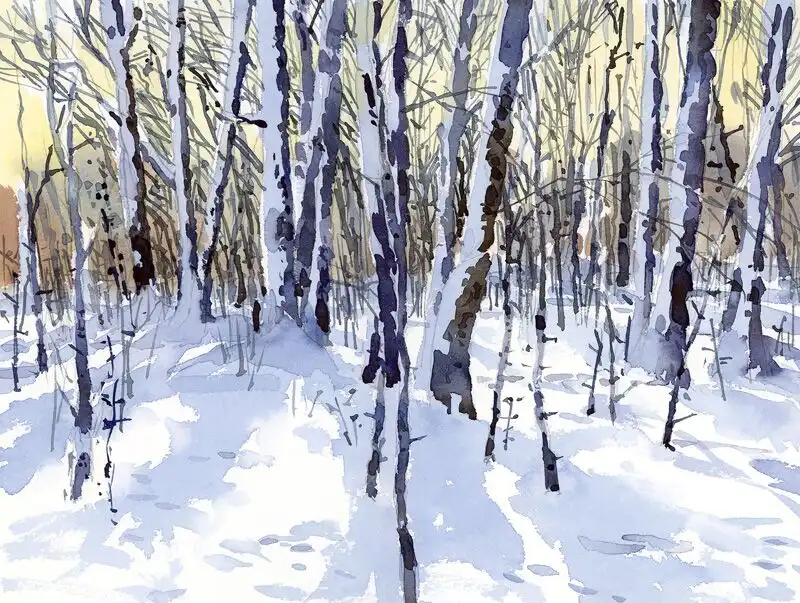
One benefit of painting in winter is that the prime lighting occurs earlier in the day. Indeed, in December and January, it grows dark by 4 p.m. This provides me with a brief yet convenient timeframe, when the setting sun and slanted light can turn a small part of woods into a glowing illusion. I have just enough time to depict the warm yellow sky and lengthening blue shadows on the snow.
4 Seek complementary colors.
Despite being retired from heavy usage, my rusty red wheelbarrow has been patiently waiting for its portrait for many years. I recently acquired a rusty green one as well. Thanks to their complementary shades, this duo becomes particularly appealing in winter, forming a focal point visible from my kitchen window. In the summer, they blend into the surrounding greenery and leafy shadows. In winter, a light cover of snow outlines their shapes and provides a stark clarity.


6: Concentrate on the melting snow
While my neighborhood appears enchanting immediately after a fresh snowfall, a warm winter day brings its own appeal. Here, the melting snow has formed large puddles along a village road. Although these puddles aren’t particularly enjoyable for pedestrians, their reflections make for delightful painting subjects. Surrounded by spots of white and mirroring the deep blue winter sky, there’s ample opportunity to experiment in these puddles with subtly layered, vivid colors.

7: Change shadows into design elements
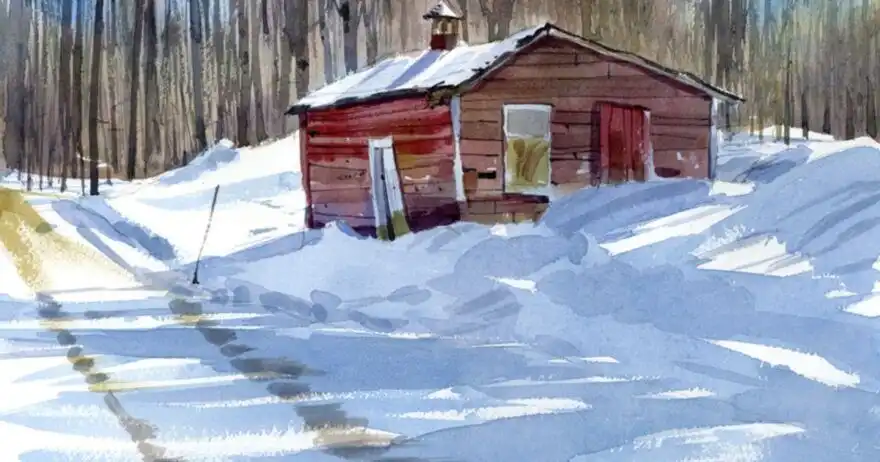
On sunny days, I generally focus on shadows in the snow. My favorite mix for shadows starts with cerulean blue, to which I incorporate a hint of carbazole violet and a small amount of raw sienna to tone down the purple. I create a generous puddle and then apply it with a large brush. As the paint dries, I drag my brush across the white paper to portray the textured edges of snowdrifts. The horizontal flow of these shadows provides a striking contrast to the vertical trees in the background.

This piece is featured in the November/December 2025 edition of Artists Magazine.
For additional insights and winter art-making tips from Blaukopf, explore this article featuring her guidance for capturing light in winter scenes.
About the Artist
Shari Blaukopf is a Signature Member of the American Watercolor Society and the Canadian Society of Painters in Water Colour. You can explore her online classes at Learn.ShariBlaukopf.com. Her book, The Urban Sketching Handbook: Working With Color, is available in bookstores and online outlets worldwide.
Planning a trip to Hanoi? Join our beginner-friendly art workshops at Art Tutor Hanoi. Perfect for travelers, beginners, and anyone who loves creativity.


