
#1: Forms
Understanding forms is the cornerstone of effective shading. Everything around us has a three-dimensional shape, and shading helps us convey that on a flat surface. Practice sketching basic forms like cubes, spheres, and cylinders to grasp the concept of light interacting with different shapes.
#2: Planes
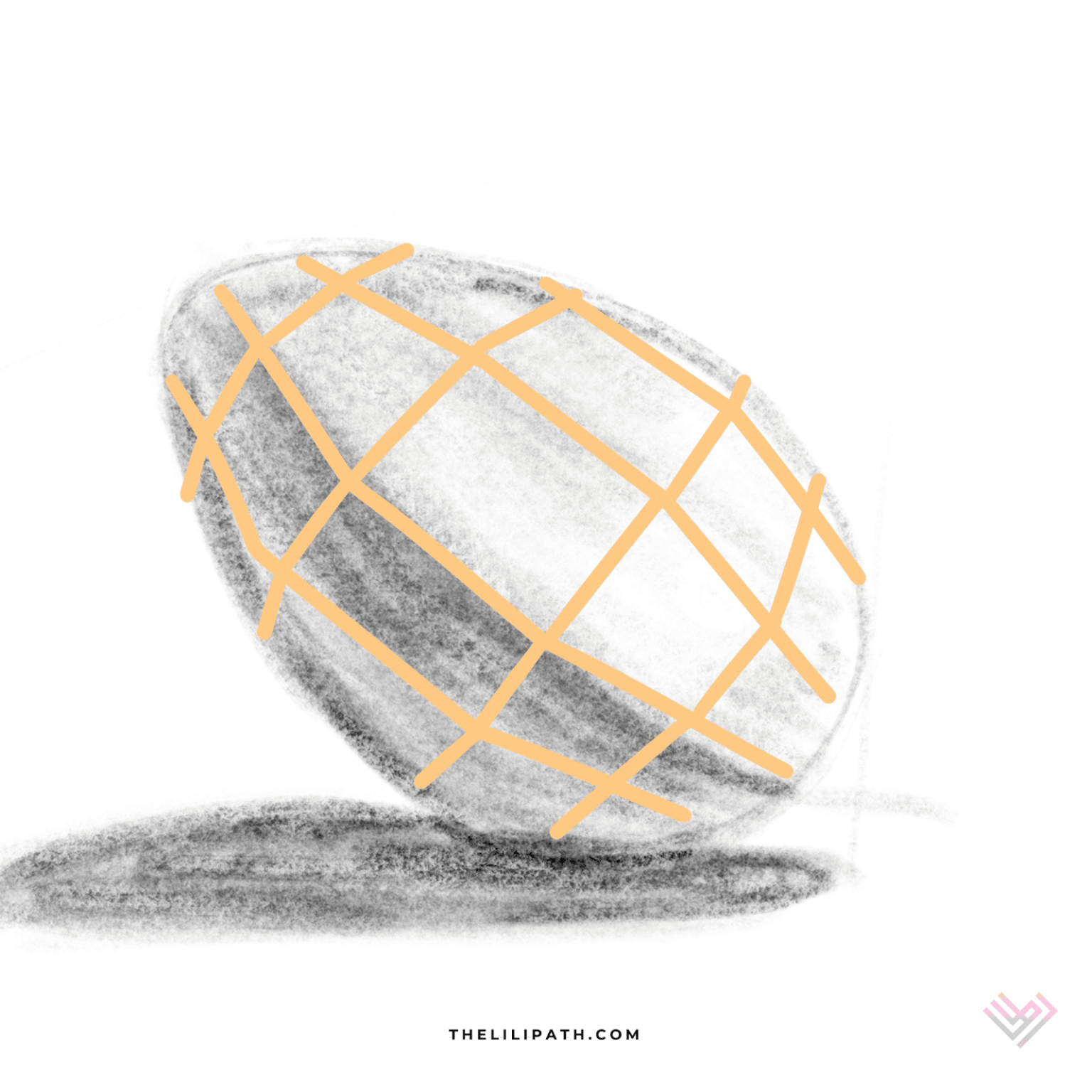
Each form is composed of planes – flat surfaces that catch or reflect light differently. Recognizing and shading these planes accurately adds depth to your artwork.
#3: Light on Form
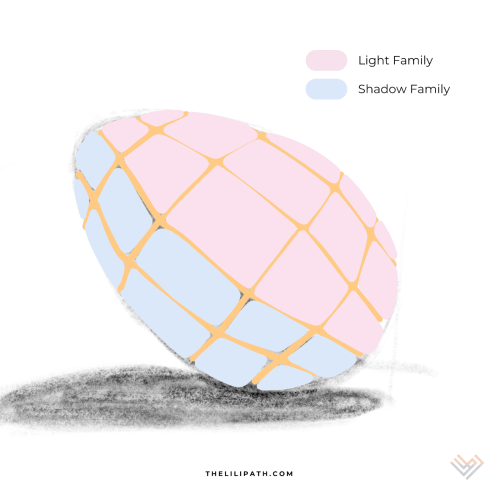
Comprehending how light interacts with forms is crucial. Learn to identify the direction of light and apply shading accordingly. The intensity of light varies on different parts of an object, creating highlights and shadows that define its shape. Think of planes as members of a family: those facing the light belong to the light family, while those away from the light belong to the shadow family.
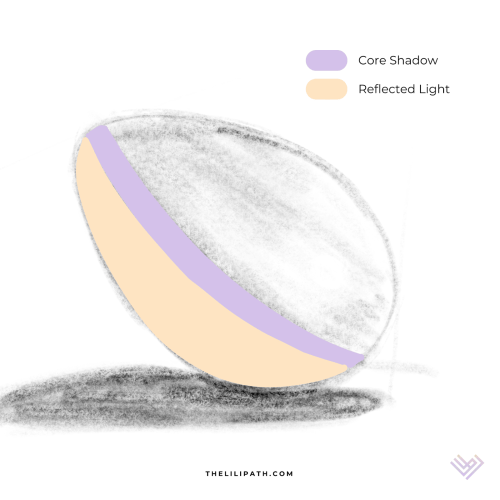
Familiarise yourself with two crucial terms here – the Core Shadow, acting as the divider between the light and shadow families, and Reflected Light, present on the dark planes between the core shadow and the object’s edge.
#4: Centerlight and Halftones
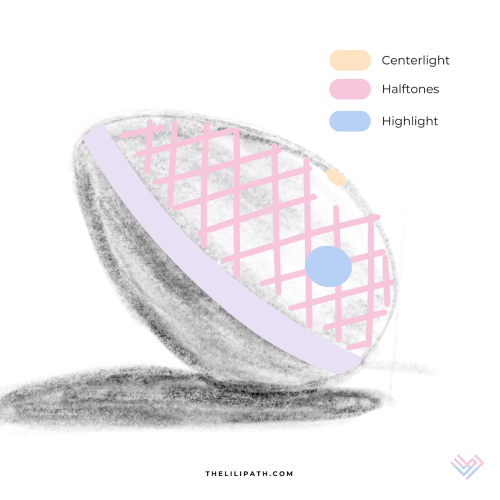
Both Centerlight and Halftones fall under the light family. Centerlight represents the area on an object that receives the most direct light, while Halftones are transitional zones between centerlight and the core shadow. Achieving a realistic representation involves mastering the delicate balance between these two elements.
When shading the Centerlight and Halftones, it is essential to incorporate highlights. A helpful rule of thumb for highlight placement is as follows:
- When the shadow is thin, the highlight will be very close to the Centerlight
- When the shadow is large, the highlight will be positioned farther from the centerlight.
This approach adds depth to your shading techniques.
#5: Cast Shadow and Occlusion Shadow
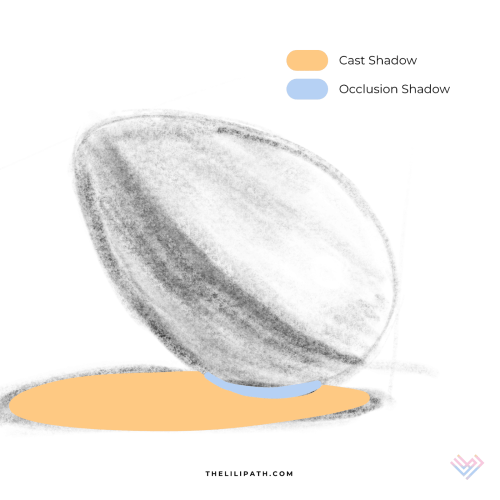
- Cast shadows are formed when an object obstructs light, creating a shadow on surfaces behind it.
- Occlusion shadows occur where objects meet and block light from reaching certain areas.
Learning to observe and accurately depict these shadows adds depth and dimension to your shading.
#6: Local Value
Every object has an inherent colour or value, known as its local value. Understanding this base tone helps you apply shading more accurately. Experiment with shading objects of different local values to develop a keen sense of colour and tone.
#7: Intensity of Light
Consider the intensity of light when shading. Objects under direct sunlight will have more contrast between light and shadow, while diffused light creates softer transitions. Practice shading scenes under various lighting conditions to adapt your skills to different scenarios.
To solidify your understanding of these shading fundamentals, engage in regular practices. Start with simple objects and gradually move on to more complex subjects. Experiment with different light sources, angles, and scenarios to enhance your versatility.
Do: Choose a few objects with basic geometric shapes and draw the light and shadow as instructed.
Upload your homework: