

For centuries, the reasons behind the fall of the Roman Empire have captivated historians and scholars alike. Various theories abound: from military conflicts and ideological rifts to a tumultuous political landscape, climate changes, and diseases like smallpox. However, rather than diving into these speculations, let us explore how art has encapsulated this monumental period in history.
The Downfall of the Roman Republic

Let’s revisit key historical events: In 387 BCE, the Gauls first attacked Rome, leading to significant turbulence. From 134 BCE to 44 BCE, the Roman Republic faced severe crises, culminating in the assassination of Julius Caesar in 44 BCE, vividly portrayed by Vincenzo Camuccini above. The establishment of the Roman Empire came in 27 BCE.
The Tetrarchy
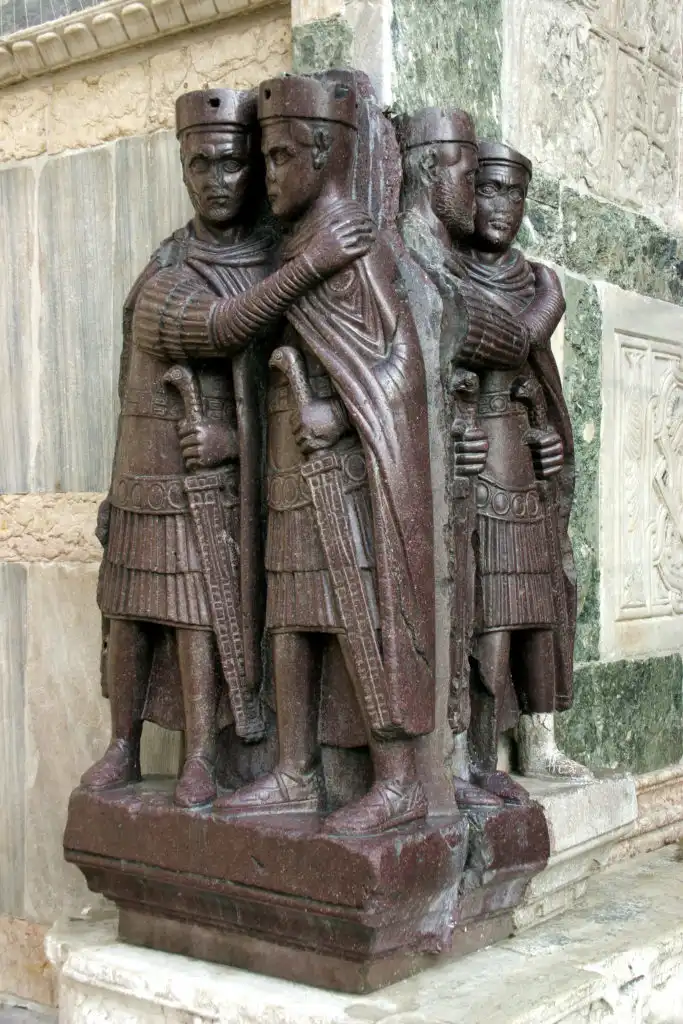
Between 235 CE and 285 CE, Rome experienced a staggering number of 19 different emperors, resulting in a severe institutional crisis known as the Crisis of the Third Century. By 293 CE, the size of the Empire necessitated a tetrarchy, which lasted until 324 CE. The four co-emperors depicted above are embraced in a 4th-century porphyry sculpture, symbolizing unity. Following this, the Empire bifurcated into the Western and Eastern Roman Empires.
The Fall of Rome

The assaults on Rome have been a common theme in the artistic representation of history. Almost eight centuries after the initial attack, the second came when the Visigoths sought to reclaim territory from the Roman Empire. After several sieges, they successfully invaded the city on August 24th, 410 CE.

Here, Karl Bryullov depicts the attack of 455 CE, marking the third sacking of Rome. The Vandals clashed with the Western Roman Emperor Petronius Maximus during this tumultuous period. Bryullov captures the chaotic atmosphere, showing how the Vandals overwhelmed the city and captured its women, all under a grim sky filled with dark clouds.

In an eclectic style, Spanish artist Ulpiano Checa captured the invasion of Rome by the Vandals, depicting horses in mid-gallop. Utilizing a cold color palette, he intertwined elements of Impressionism and Academicism to enhance the intensity of the scene.
The Course of Empire
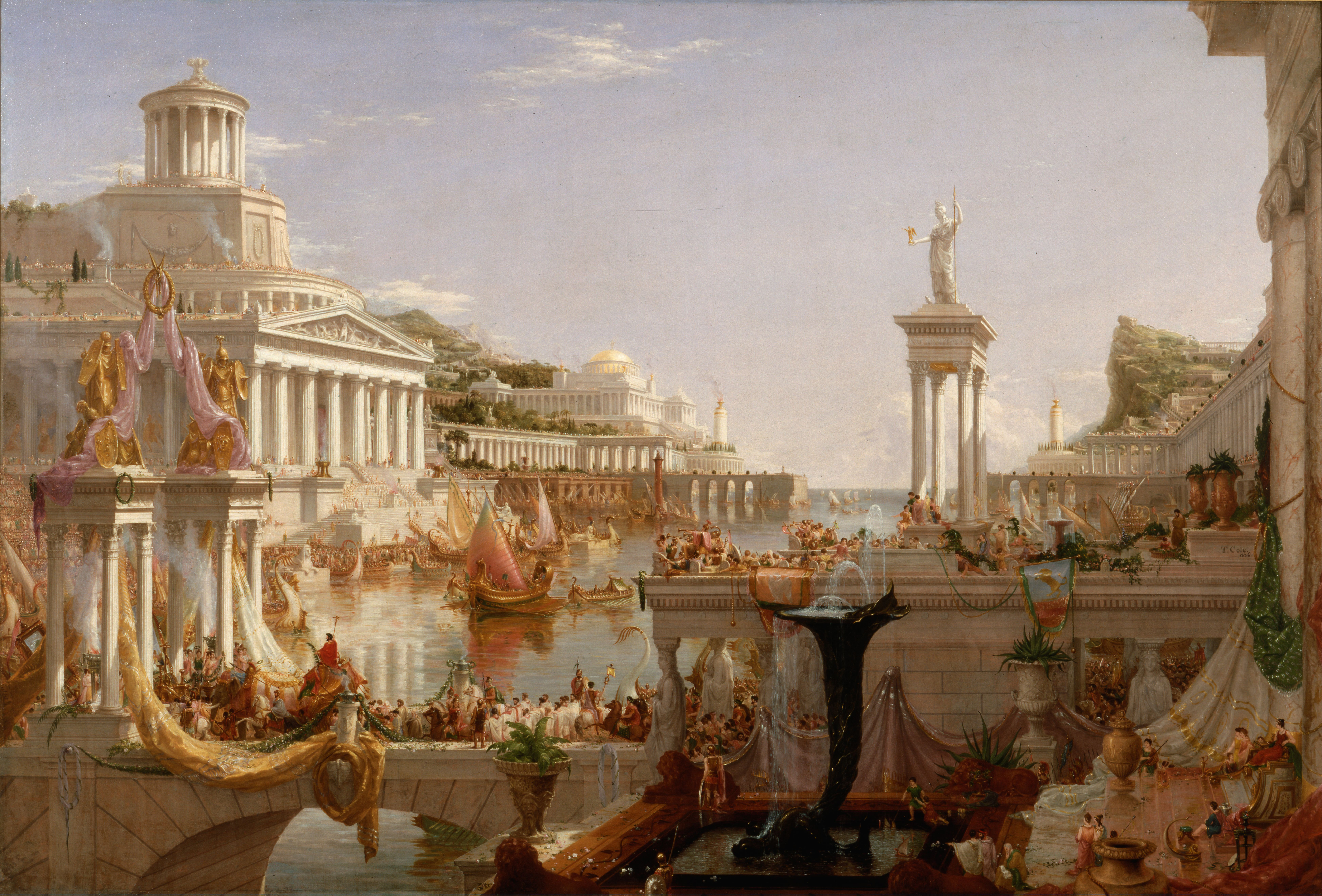
One of the most recognized series depicting this historic narrative is The Course of Empire by Thomas Cole, an English-born American artist. This series symbolizes the rise and eventual decline of an imaginary city, reflecting a common sentiment of the era that idealized pastoral life and viewed imperial ambition as a precursor to downfall and decay.
The initial paintings in the series exhibit the city’s evolution, while the third captures its zenith. In contrast, the fourth artwork exhibits its descent into decay.
Decay
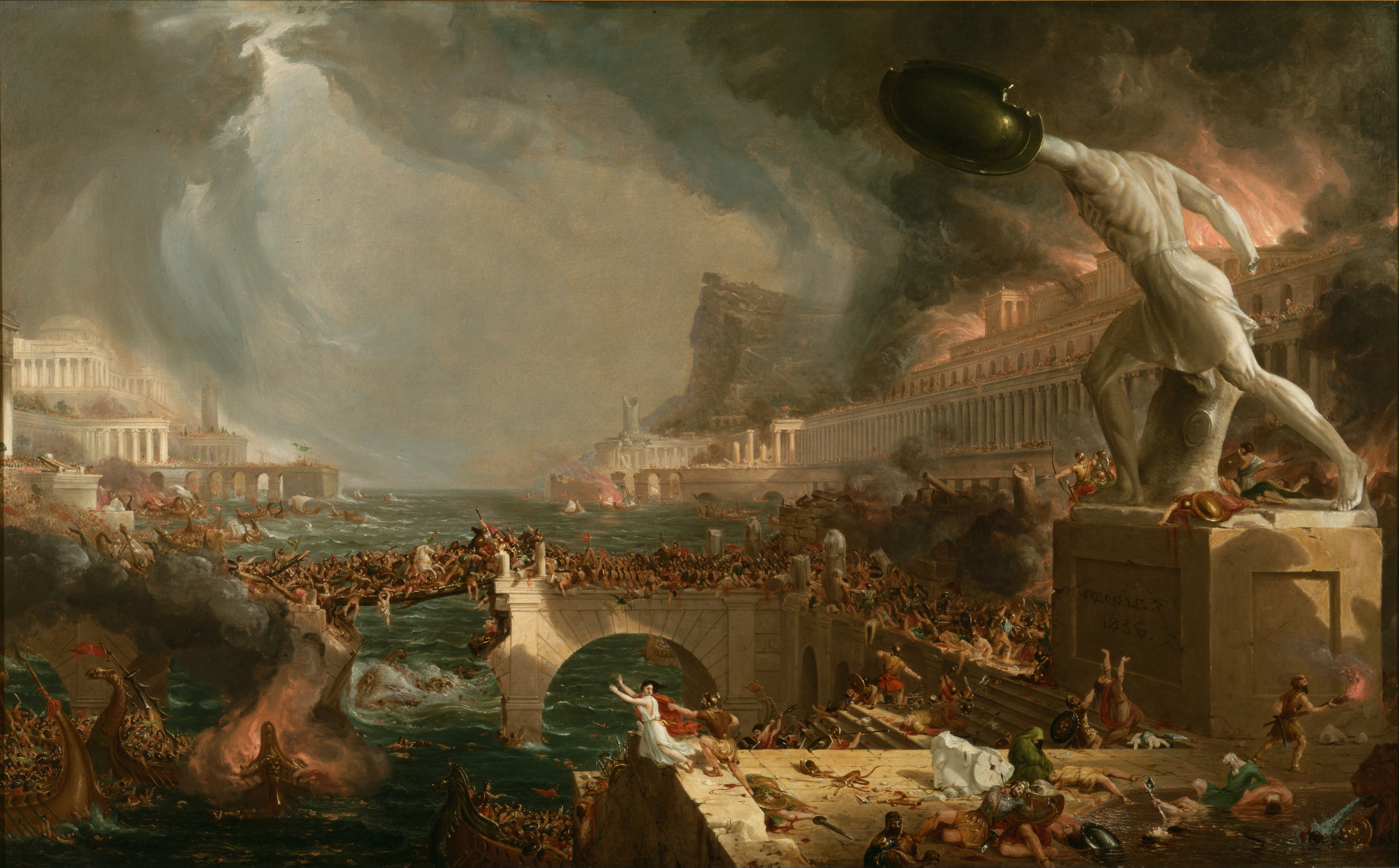
In his depiction of destruction, Thomas Cole captures the chaos of a city besieged by a violent storm. Viewers can sense the battle unfolding in the distance as the enemy breaches the city’s defenses and attacks its citizens.
Despair
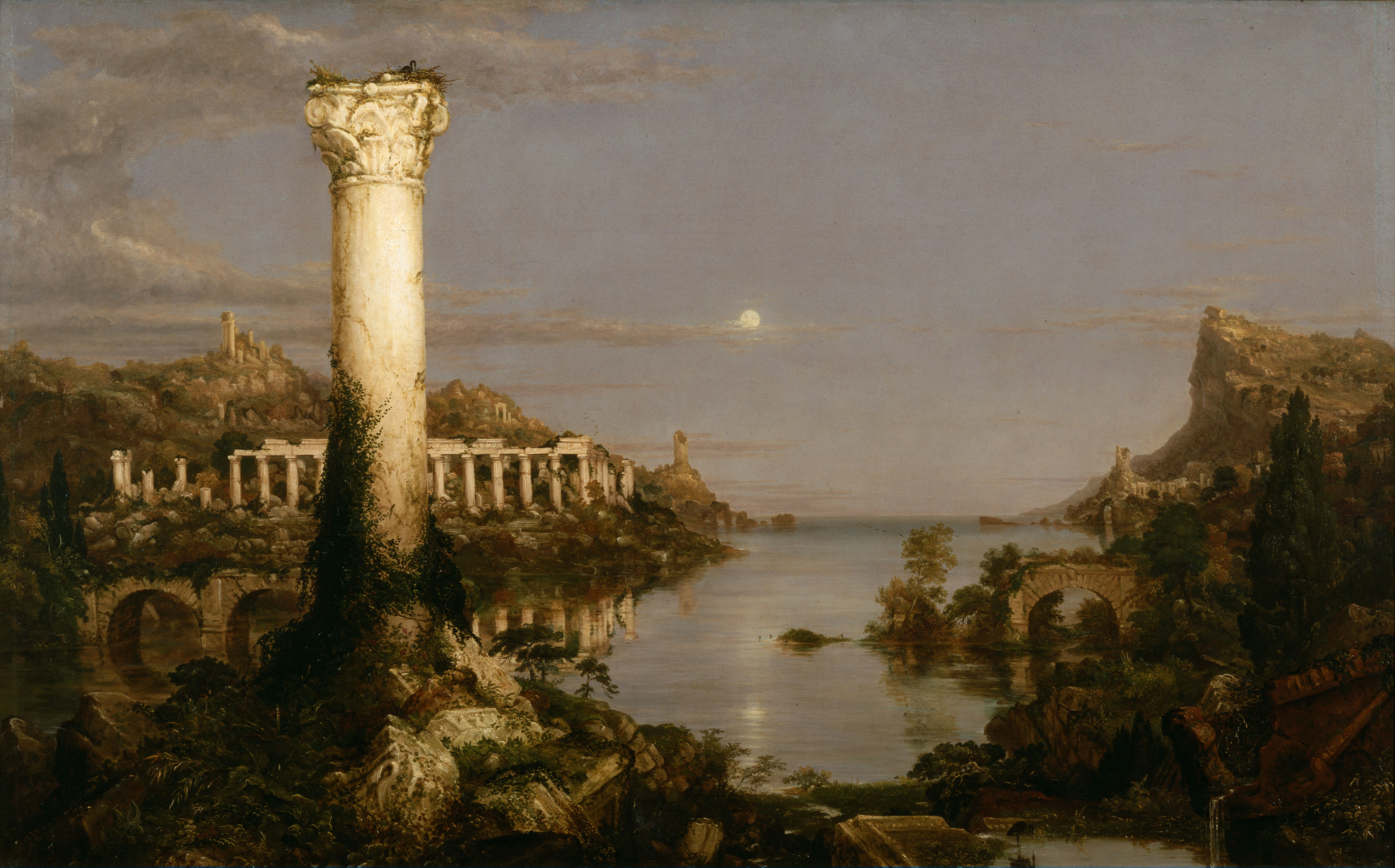
This concluding painting in the series illustrates the aftermath of the city’s ruin, decades later. It portrays a once-thriving civilization now overtaken by nature, presenting an image of desolation and melancholy, yet eliciting reflections on the grandeur that existed before its fall.
For those looking to ignite their creative spirit, Art Tutor Hanoi offers engaging drawing and painting workshops that cater to beginners in a welcoming environment. Perfect for travelers and expats seeking artistic enrichment while in Hanoi.


