
In this article, I will share some essential aspects of my recent painting titled Three Pylons (illustrated below). This piece, created a few months ago, captures a haunting seascape as seen from the jetty at Kingfisher Bay, K’gari (formerly known as Fraser Island). The three pylons depicted are well-known landmarks among locals and frequent visitors. Notably, though the jetty has experienced significant alterations over three decades, these pylons have largely remained unchanged.

Subject
Here’s the reference photo I used for inspiration:

Feel free to recreate this scene in your own style. I would love to hear how your painting turns out!
Materials I Used
Below is a list of materials utilized for this painting, which is fairly standard:
- Brushes, palette knives, and oil paints.
- Surface: Ampersand gessoboard, 12 by 16 inches.
- Colors: Payne’s gray, ultramarine blue, cobalt blue, cobalt turquoise, cadmium red, magenta, alizarin crimson, cadmium yellow, cadmium yellow deep, cadmium yellow light, viridian green, raw umber, and titanium white.
For additional details about my materials, please check my supplies list.
Time-Lapse Video
Below is a time-lapse video showcasing the process of creating the painting:

Surface Preparation and Initial Sketch
(Please note that some of the progress images might appear slightly dark due to underexposure.)
I began by staining the surface with Payne’s gray. Although I don’t frequently use this color, it seemed ideal for the dark, cool aesthetic of this subject matter.

Next, I removed the excess paint using paper towels and employed my finger to outline the mountains, pylons, and their reflections. Interestingly, the marks left by my finger effectively captured the shapes of the pylons and their reflections. The challenge that followed was to maintain that spontaneous look as I transitioned to using brushes.
Laying the Dark Foundation
Much of my effort involved establishing a solid dark foundation. I didn’t start touching the lighter areas until I was fully satisfied with the darker regions. In pieces like this, the dark areas provide the bulk of the structure and contrast.
I started by applying the darkest pigments, using spans of Payne’s gray complemented with ultramarine blue.
I then refined these dark shapes and added a hazy environment by gently scumbling colors onto the surface.
Incorporating Light
Once the dark foundation was firmly established, I progressed to the light areas, beginning with the sky. I adopted a cautious approach, scumbling small amounts of paint on with a dry brush, using light blues, yellows, reds, and purples. The objective was to build up layers of distinct light shades to effectively convey the sky’s depth and atmosphere.
Then, I focused on the water. Using more defined brushwork, I emphasized the way light reflects off the calm surface of the water. The shades consisted of a muted, light blue created from a mix of Payne’s gray, ultramarine blue, titanium white, with a hint of magenta. A softer synthetic brush was ideal for this part, whereas rougher hog-haired brushes facilitated the scumbling for the sky and mountains.
A crucial aspect of the water was the interplay of light and shadow, with highlights defining the gentle contours on its surface. As I painted, I allowed my brush to feel and engage with the water’s movement, tracing the undulations over its form. I varied brush sizes to convey distinct aspects of the water — utilizing larger brushes with less definition for distant areas and smaller brushes with intricate line work for the foreground.
Final Adjustments
At this point, the painting was approximately 90% completed. To finalize it, I tinkered and adjusted various elements to ensure cohesiveness and completeness. Although almost done, that last 10% required several sessions over several days. With my growing experience, I find increasingly more avenues to enhance my paintings, resulting in longer completion times.
I used a palette knife to add texture to the sky, enhancing the atmosphere. Additionally, I introduced more vivid reds, greens, and yellows with a brush.
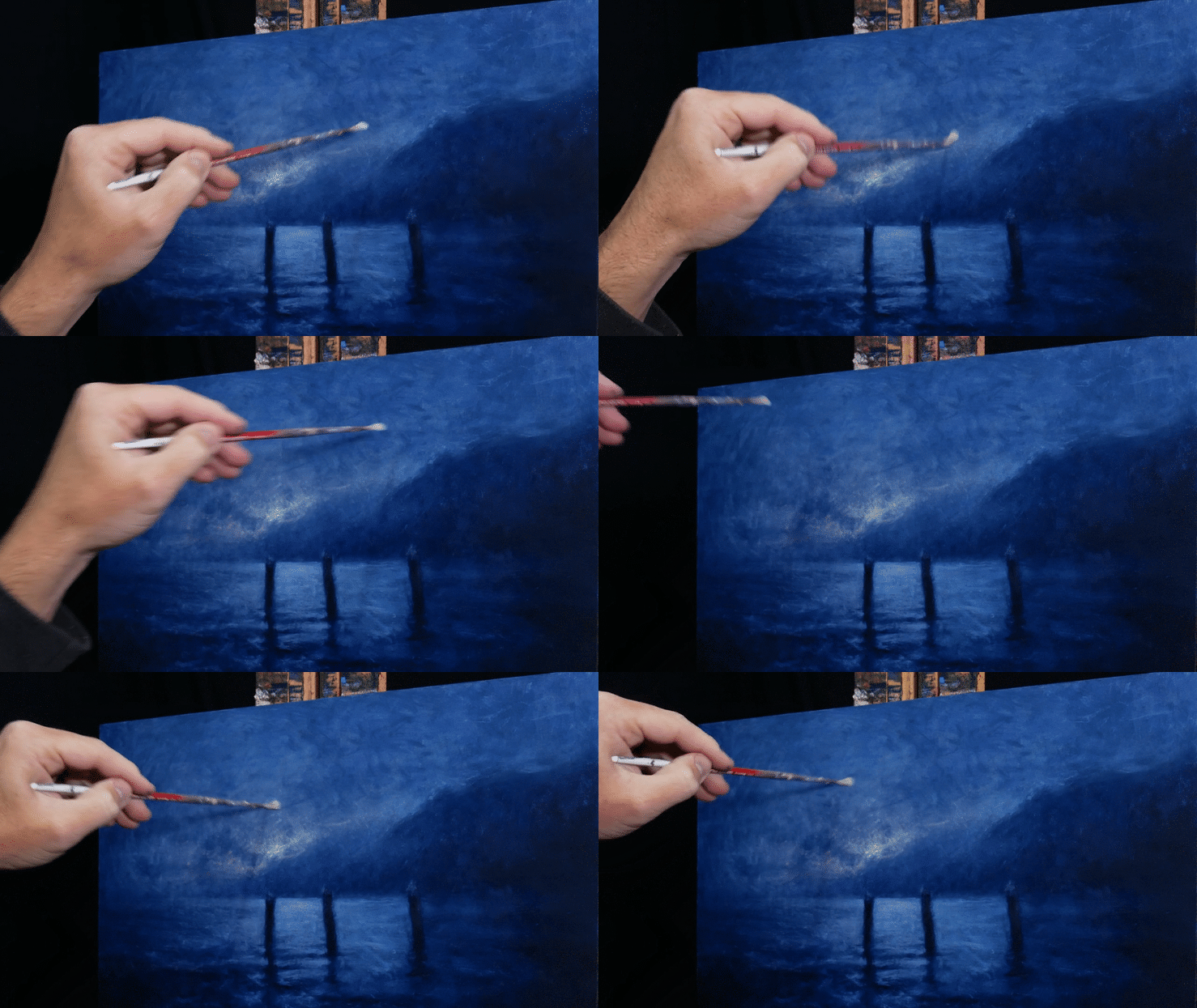
Much effort was dedicated to perfecting the highlights on the “white” tops of the pylons. As a central feature in the painting, it was crucial to render them accurately. Balancing detail while maintaining the atmospheric and impressionistic feel was challenging. I experimented with various techniques and tools, applying a fine liner brush for delicate highlights, soft dabbing with my finger, and scraping with a palette knife. Ultimately, this blend of methods yielded successful results. In terms of color, I noted the tops of the pylons required subtle brightness compared to the bottoms. I discussed color challenges further in a previous newsletter: A Tricky Color Problem.
I added wispy highlights on the water using a fine liner brush and a light blue hue. It was essential to avoid going too light with these highlights, ensuring they didn’t dominate the painting. Surprisingly, the highlights needed to be darker than one might initially think.
Lastly, I added a soft green highlight to indicate a distant boat. This final touch required balancing visibility to emphasize its light source while maintaining a sense of haziness and distance.

Final Touch and Signature
I completed the painting by signing it in the bottom right corner using a fine Kolinsky brush and alizarin crimson paint.
Reflections
I am pleased with how this painting turned out. It stays true to the subject and my recollection of that morning. Though it’s a simple and understated scene, it posed considerable challenges in execution, leaving little room for error. Attention to color and detail was pivotal.

Here are some close-up details of the work:

IMG_6903
-
Green Highlight
IMG_6904 -
IMG_6906

IMG_6908
-
IMG_6909
-
IMG_6911
-
IMG_6912
-
IMG_6913
-
IMG_6915
-
IMG_6916
-
IMG_6917
-
IMG_6918


Thank you for taking the time to read. I would love to hear your thoughts in the comments.

Dan Scott
For those looking to explore their artistic side in a supportive environment, consider joining a workshop at Art Tutor Hanoi. With beginner-friendly drawing and painting sessions, it’s the perfect location for travelers, expats, or anyone eager to unleash their creativity.


