

Understanding Depth and Atmospheric Perspective in Painting
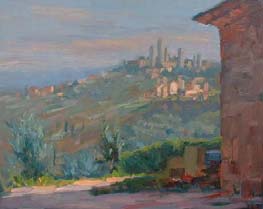
Creating the illusion of three-dimensional space on a two-dimensional surface is essential for realistic paintings. This is achieved through depth, which painters convey by applying both linear and atmospheric perspective principles. Atmospheric perspective refers to changes in color and value that simulate how objects appear further away, while depth also involves shape changes guided by linear perspective rules such as diminishing size and overlapping forms.
At Art Tutor Hanoi, beginners often explore how incorporating foreground, middle ground, and distance in a composition allows these principles to work together, enhancing the sense of space and realism in an artwork.
Linear Perspective: Shapes and Spatial Relationships

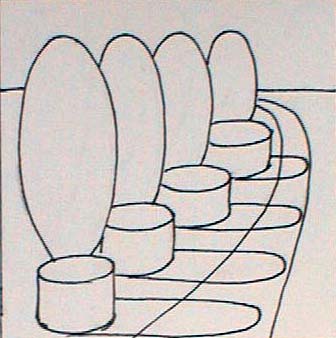
Linear perspective helps artists depict depth by representing objects proportionally smaller as they recede into the distance. Key features include diminishing size, where distant objects appear smaller; baselines, which align elements along a horizontal plane; receding lines directing the viewer’s eye into space; and overlapping forms that visually suggest closer and farther objects.
This geometric framework is critical for organizing spatial planes and supports atmospheric perspective by providing a structured sense of depth that complements the color and value adjustments necessary for realism.
How Atmospheric Perspective Uses Color to Convey Depth
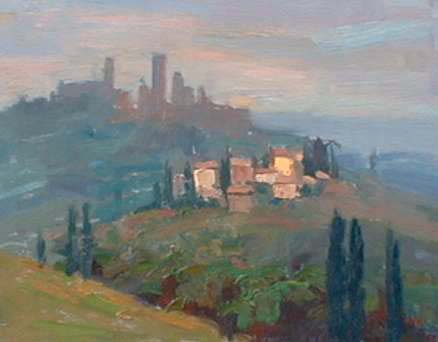
Atmospheric perspective involves subtle changes in color properties like value (lightness or darkness), saturation, hue, and dark accents to illustrate distance. As objects recede, their colors tend to shift towards cooler, less saturated, and lighter values, mimicking the effect of particles in the air that diffuse light.
This technique allows viewers to perceive spatial depth intuitively, especially when paintings include distinct planes—foreground with vivid colors and detailed forms, middle ground with moderated values and saturation, and distance where these traits soften dramatically.
Observing Changes in Value Across Distance
Changes in value are among the most observable effects in atmospheric perspective. As objects move farther away, the values of light and shadow converge toward a middle average value—lights darken, and shadows lighten. This convergence is particularly noticeable in foggy or hazy conditions but becomes subtler over greater distances in clear atmospheres.
Value recession diagrams illustrate how these nuances adjust from close-up to distant views and are valuable educational tools for understanding the gradual loss of contrast and detail in landscapes or urban scenes.
Value Recession under Different Lighting Conditions

Lighting profoundly influences value recession in atmospheric perspective. For example, on sunny, overcast, or moonlit days, landscape elements such as trees, rocks, or roads approach a common distant value. Under daylight, this average ranges approximately from 5 to 9.5 on a value scale, where 9.5 corresponds to the brightness of the sky near the horizon. In moonlight, this average drops to about 0.5, representing very subdued illumination.
Moreover, shadows’ value recession occurs faster than that of lights, shifting from mid-values around 4 to the distant 9.5, while lights recede more slowly from about 8 to 9.5. Understanding this difference enhances an artist’s ability to capture realistic atmospheric conditions.
Practical Advice for Applying Atmospheric Perspective
While reference charts for atmospheric perspective are helpful, painters at Art Tutor Hanoi emphasize the importance of direct observation when working from nature. These charts serve best as guides, especially when painting from imagination or working indoors. Real-world conditions and lighting complexities often demand adaptation based on what the artist actually sees.
For those beginning to master atmospheric perspective, combining an understanding of linear perspective with careful observation of atmospheric effects and value shifts creates powerful tools to bring paintings to life with convincing depth.
Explore more about these techniques and practice in art classes in Hanoi.
For further reading on atmospheric perspective and color theory, the Tate Modern’s resource on atmospheric perspective offers an excellent overview.